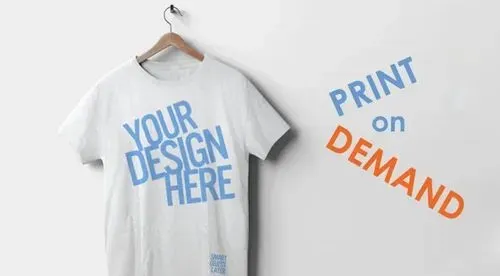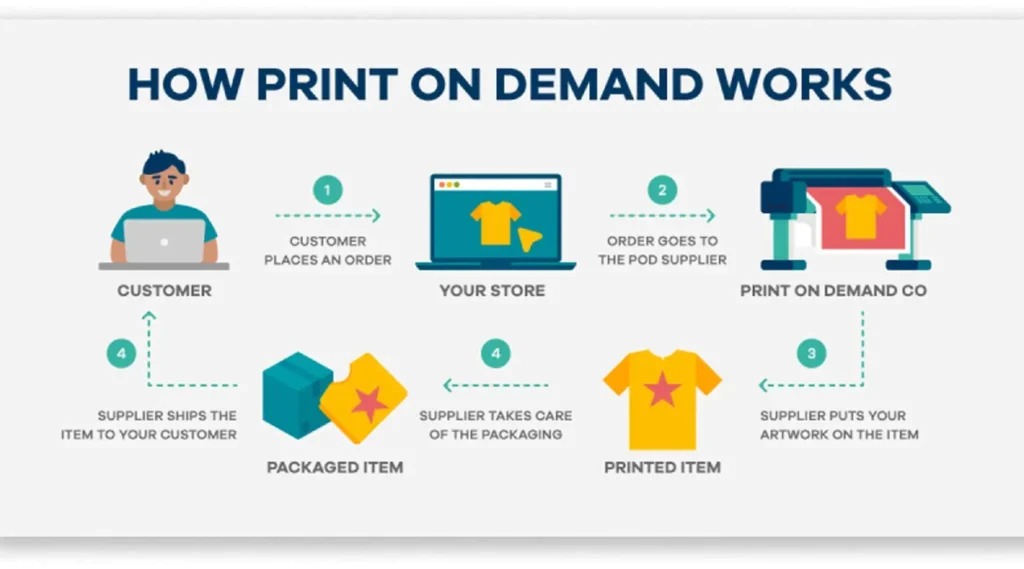
Print on Demand is reshaping how brands launch products online, offering flexibility and minimal upfront risk. As a print on demand business model, products are created only after a customer places an order, helping conserve cash flow and reduce inventory risk. This approach enables strong brand customization, allowing designers to test new ideas while maintaining control over packaging and storytelling. With thoughtful optimization for ecommerce fulfillment and awareness of dropshipping considerations, merchants can balance product variety with reliable delivery timelines. By focusing on profit margins and value, you can build a sustainable business that scales through smart pricing and differentiated design.
Another way to describe this approach is on-demand printing, where merchandise is produced only after a customer places an order. The print-to-order model supports branding through personalization and rapid market testing without carrying finished stock. In practice, order-based manufacturing relies on fulfillment partners who handle production, quality checks, and shipping, enabling scalable growth. When you layer this with thoughtful packaging and messaging, you retain control over brand voice while expanding your product ecosystem.
Print on Demand vs Dropshipping: Core Differences in Brand Customization and Fulfillment
Understanding the Print on Demand (POD) business model alongside dropshipping highlights a fundamental choice for brand strategy and ecommerce fulfillment. POD centers on producing items only after an order is placed, enabling strong brand customization through artwork, typography, and packaging while keeping upfront costs low. This model supports testing designs with minimal inventory and tying fulfillment closely to your brand story, which can improve perceived value and customer loyalty.
Dropshipping shifts the focus from production to supplier coordination, offering breadth in product catalogs and faster scaling in some markets, but often with trade-offs in branding control and profit margins. When comparing to POD, the branding experience may be more generic unless you invest in white-label options and careful supplier selection. In terms of ecommerce fulfillment, speed and reliability depend on the supplier network, which affects customer expectations and long-term retention.
Brand Customization and Product Quality: Designing for Trust and Loyalty
POD enables high brand customization because you control artwork, product selection, and packaging. This fosters trust and differentiation. However, quality varies by provider and printing method; order samples and set clear quality standards to protect your brand. In terms of profit margins, premium designs and limited editions can justify higher price points and stronger ROI.
Dropshipping can offer branding through packaging and white-label options, but it’s typically more limited for deep customization. Quality control is distributed across multiple suppliers, so maintaining consistency requires rigorous vetting, clear return policies, and proactive communication to preserve customer trust.
Inventory, Fulfillment Speed, and Customer Experience in Ecommerce Fulfillment
Inventory management in these models affects risk and speed. POD does not stock finished goods, reducing inventory risk and enabling rapid iteration of designs. Fulfillment speed depends on the print partner, so delivery timelines—and expectations for ecommerce fulfillment—can vary, especially for international orders.
Dropshipping removes stock ownership but relies on supplier networks to fulfill orders. This can lead to longer, more variable shipping times but also avoids warehousing costs. To protect the customer experience, synchronize product data, confirm availability, and communicate realistic delivery windows.
Profit Margins and Pricing Strategies Across Models
Profit margins in the Print on Demand business model hinge on production costs, favorable pricing, and the ability to command premium for customization. Smart design choices, bundled offers, and value-added features can boost margins and enable sustainable profitability even with higher per-unit costs.
Dropshipping margins are often thinner due to competition and intermediary fees. Brands protect profitability by optimizing pricing strategies, leveraging volume discounts, and creating exclusive designs or bundles that differentiate listings and improve perceived value.
Choosing the Right Model for Your Brand: When to Use POD, Dropshipping, or Hybrid
Choosing the right model should align with your brand customization goals, risk tolerance, and customer expectations for fulfillment. If you want a strong brand story and personalized packaging, Print on Demand is often the best match within the print on demand business model and its ecommerce fulfillment workflows.
If speed to market and a broad catalog are priorities, Dropshipping can deliver rapid testing and expansion, though you may sacrifice some control over branding and product quality. A hybrid approach lets you leverage both channels to optimize profit margins and supply chain resilience.
Practical Steps to Pilot and Scale Your Fulfillment Strategy
Practical steps to pilot and scale begin with clarifying brand goals and mapping which items benefit most from customization under the Print on Demand business model, then selecting reliable partners to optimize ecommerce fulfillment.
Execute a structured pilot: order samples, validate color fidelity, test shipping timelines, and measure customer response. As you scale, integrate marketing content and SEO strategies to improve product discoverability for both POD designs and dropship items, aiming for sustainable profit margins.
Frequently Asked Questions
What is the print on demand business model and how does it affect profit margins?
The print on demand business model prints products only after a customer places an order, which minimizes upfront costs and inventory risk. It enables easy experimentation and strong brand customization, but margins depend on per-item production costs and your pricing strategy. Because production happens with the print provider, ecommerce fulfillment is handled by the partner, which can affect shipping times and reliability. To protect margins, optimize pricing, test designs, and choose providers with predictable costs and quality.
How does brand customization work with print on demand and what impact does it have on ecommerce fulfillment?
Brand customization is a core strength of print on demand: you control artwork, product selection, and packaging to create a cohesive brand experience. Since fulfillment is handled by the print provider, choose partners who can reproduce colors and materials consistently to support your brand promise. This direct link between customization and fulfillment helps maintain a premium customer experience and reduces surprises at delivery.
Can Print on Demand offer competitive profit margins compared to dropshipping?
Yes, print on demand can offer strong profit margins when you price for value and manage production costs. Margins are often higher with premium or limited‑edition designs, but can be thinner in price‑competitive markets. Dropshipping margins can be thinner due to competitive pricing and multi‑step handling, so testing bundles and value adds is important.
What are the key differences in ecommerce fulfillment between print on demand and dropshipping?
Key differences in ecommerce fulfillment: print on demand ties production to each order and relies on a print provider for printing and shipping, which can limit control over lead times. Dropshipping uses suppliers to ship directly to customers, offering breadth but uneven quality and longer or variable ship times. Branding control, packaging consistency, and expectation management differ between the two; plan accordingly.
How should I decide between print on demand and dropshipping for branding and customer experience?
To decide, weigh branding and customer experience goals: if you want strong brand customization and a high‑quality unboxing experience, print on demand is often a better fit. If you need a broad catalog and faster onboarding of many products, dropshipping may be preferable. You can also blend models—use print on demand for flagship items and dropship the rest—to balance brand impact and speed.
What steps can I take to ensure quality and consistent product fulfillment in a print on demand setup?
Vet print providers carefully and order samples to compare print quality, color fidelity, fabrics, and packaging. Establish clear quality standards and a return policy, and maintain standardized product pages and imagery. Monitor fulfillment metrics (shipping times, defect rates) and keep customers informed about delivery windows to preserve brand trust.
| Aspect | Print on Demand | Dropshipping |
|---|---|---|
| Definition | Production and fulfillment occur after an order; designer uploads artwork and selects products; a partner prints and ships directly to the customer. Advantages: minimal upfront costs, no inventory risk, strong brand customization. | Retailer lists products not kept in stock; upon purchase, order goes to a supplier who ships to the customer. Advantages: wide product catalog, low upfront investment, scalable; inventory is not held by the retailer. |
| Branding & Customization | High customization: control artwork, product selection, and packaging to build a cohesive brand story. | Branding possible but more limited; white-label options or branded packaging exist, but customization is typically less extensive than PoD. |
| Product Quality & Consistency | Quality depends on the PoD provider and printing method; order samples and set clear quality standards; batch consistency matters for trust. | Quality control is challenging due to multiple suppliers; vet suppliers, request samples, and enforce returns/guarantees to protect the brand. |
| Inventory Management | No finished goods stock; low inventory risk; easy to test designs and scale designs without pre-purchasing inventory. | No stock held, but requires ongoing supplier management and catalog synchronization; keep data, pricing, and stock levels accurate. |
| Margins & Pricing | Margins depend on production cost and pricing strategy; potential for healthy margins with premium or bespoke designs. | Margins can be thinner, especially in crowded markets; rely on volume, bundles, or value-added content to maintain profitability. |
| Fulfillment Speed & Customer Experience | Production/shipping timelines tied to the print provider; longer fulfillment times than stocked items, especially internationally. | Ship times vary by supplier locations; align expectations and communicate delivery windows clearly. |
| SEO & Discoverability | Both models can be optimized for search; PoD enables signature products with strong branding to stand out. | Optimization depends on product pages, images, and content quality; branding can influence search intent and click-through. |
| When to Choose | Choose Print on Demand for strong brand differentiation, customization, low upfront risk, and a focus on apparel/home items. | Choose Dropshipping for breadth of products, faster onboarding of many items, and scalability with less emphasis on design/branding. |
| Hybrid Approaches | Blend strengths: use Dropshipping for a broad catalog and Print on Demand for signature designs or limited editions. | |
| Practical Steps to Get Started | Clarify goals and product strategy; vet PoD and dropship partners; model costs and margins; build a seamless customer experience; start with a pilot; invest in branding and content. |
Summary
Conclusion