
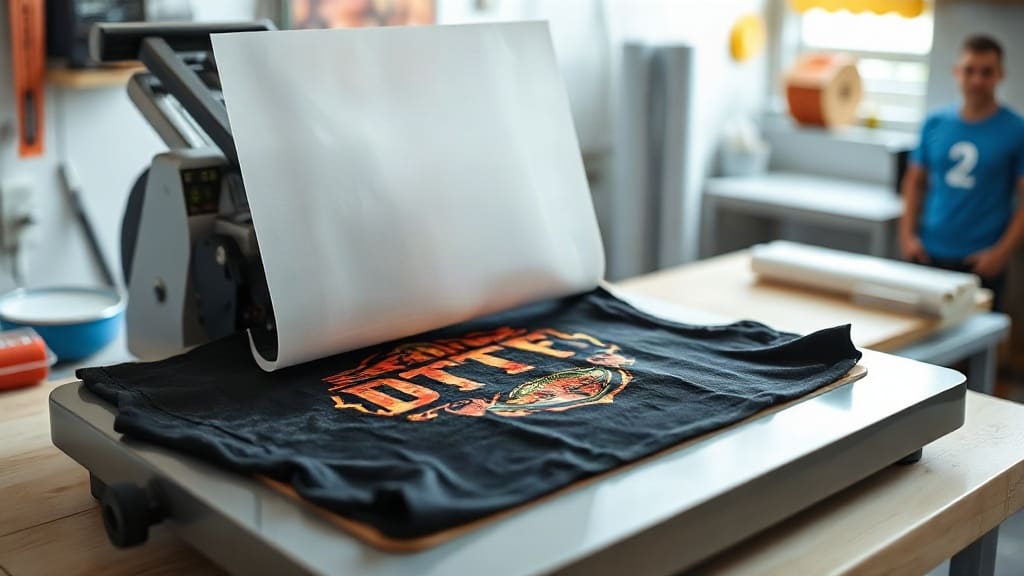
If you have ever wanted to print vivid, full-color designs on a wide range of fabrics without the hassle of weeding or the limitations of traditional vinyl, DTF transfers are your answer. Direct-to-film printing has taken the garment decoration world by storm, and for good reason: it offers unmatched versatility, durability, and ease of use. Whether you are a small business owner, a hobbyist, or a professional printer, understanding DTF transfers can open up a new world of creative possibilities. In this guide, we will walk you through everything you need to know, from what DTF transfers are to how you can apply them like a pro.
What Are DTF Transfers?
DTF stands for Direct-to-Film. It is a printing method where your design is printed onto a special PET film using water-based pigments, then coated with a hot-melt adhesive powder. Once the powder is cured, the transfer is ready to be applied to fabric using a heat press. Unlike DTG (Direct-to-Garment) printing, which requires the garment to be loaded into a specialized printer, DTF transfers are printed separately and can be stored for later use. This makes them incredibly convenient for on-demand production and for printing on fabrics that are difficult to handle, such as polyester, nylon, and even leather.
The process is relatively simple: print, powder, cure, and press. The result is a soft, stretchable print that bonds permanently to the fabric. Because the design is printed on a film, you can achieve fine details, gradients, and photographic images that would be challenging with vinyl. Plus, DTF transfers work on both light and dark garments without the need for separate white ink layers or pre-treatment, which is a common requirement in DTG printing.
Why Choose DTF Transfers Over Other Methods?
When you compare DTF transfers to other decoration techniques like screen printing, heat transfer vinyl (HTV), or DTG, several advantages stand out. First, there is no weeding involved. With HTV, you have to cut and remove excess vinyl, which is time-consuming and limits the complexity of your designs. DTF eliminates that step entirely. Second, DTF transfers are incredibly durable. When applied correctly, they withstand repeated washing without cracking, peeling, or fading. Third, they are cost-effective for short runs. Screen printing requires setup costs for each color, making small batches expensive, while DTF transfers have no per-color setup fees, so you can print one or one hundred with the same ease.
Another key benefit is the ability to print on a wide range of materials. Cotton, polyester, blends, spandex, canvas, and even treated leather can all receive DTF transfers. This versatility means you can offer your customers a broader range of products without investing in multiple printing systems. Additionally, DTF transfers have a soft hand feel that is comparable to DTG, so the print does not feel heavy or plastic-like on the garment.
How to Apply DTF Transfers: Step-by-Step
Applying DTF transfers is straightforward, but following the correct steps ensures a professional, long-lasting result. Here is a detailed guide to help you get it right every time.
1. Prepare Your Workspace and Materials
Before you begin, gather everything you need: your DTF transfer, a heat press, a garment, and a protective sheet (like parchment paper or a Teflon sheet). Ensure your heat press is on a stable surface and that you have a clean, flat area to work on. Pre-press the garment for a few seconds to remove moisture and wrinkles. This step is crucial because any moisture can interfere with the adhesive and cause the transfer to fail.
2. Set the Correct Temperature and Pressure
DTF transfers typically require a temperature between 300°F and 325°F (150°C to 160°C). Pressure should be medium to firm, around 40-60 PSI. Always check the instructions provided by your transfer supplier, as different films and powders may have specific requirements. Too little pressure can result in poor adhesion, while too much can cause the design to spread or the fabric to scorch. It is a good idea to test on a scrap piece of fabric before pressing your final garment.
3. Position the Transfer and Press
Place the DTF transfer onto the garment with the printed side facing up. If your transfer has a white backing, that side goes against the fabric. Cover it with a protective sheet. Press for 10-15 seconds. Do not move the transfer during pressing. Once the time is up, lift the press and allow the garment to cool completely before peeling the film. Peeling while hot can cause the design to stretch or tear.
4. Peel and Post-Press
After the garment has cooled, slowly peel away the film. The design should remain on the fabric. For added durability, especially on stretchy fabrics, you can do a second press for 5-10 seconds with a protective sheet over the design. This post-press ensures the adhesive fully cures and bonds with the fibers. Allow the garment to rest for 24 hours before washing.
Common Mistakes to Avoid with DTF Transfers
Even experienced crafters can run into issues with DTF transfers. Here are some common pitfalls and how to avoid them.
- Insufficient pressure: If the transfer does not adhere properly, it may peel off after washing. Use a pressure gauge or test with a firm press.
- Wrong temperature: Too low and the adhesive won't activate; too high and the film may melt or the design may scorch. Always follow the recommended settings.
- Peeling too soon: Patience is key. Let the transfer cool completely before peeling. Hot peel can distort the print.
- Not pre-pressing: Moisture and wrinkles are enemies of DTF. Always pre-press the garment for 5-10 seconds.
- Using the wrong film: Not all DTF films are created equal. Choose a high-quality film that matches your printer and powder.
DTF Transfers vs. Other Printing Methods: A Quick Comparison
To help you decide if DTF is right for your needs, here is a side-by-side comparison with other popular methods.
- DTF vs. HTV: DTF requires no weeding and handles complex designs easily. HTV is limited to solid colors and simple shapes unless you layer, which is time-consuming.
- DTF vs. DTG: DTF works on more fabric types, including polyester and blends, and does not require pre-treatment. DTG is generally faster for direct printing but limited to cotton-rich fabrics.
- DTF vs. Screen Printing: DTF is more cost-effective for small batches and multi-color designs. Screen printing is better for large runs of simple designs.
Tips for Long-Lasting DTF Prints
To ensure your DTF transfers look great wash after wash, follow these care instructions:
- Wait at least 24 hours before washing the garment.
- Turn the garment inside out before washing.
- Use cold water and a gentle cycle.
- Avoid using bleach or fabric softeners.
- Tumble dry on low heat or hang dry.
- Do not iron directly on the print. If needed, iron the reverse side.
By following these simple guidelines, you can extend the life of your DTF prints significantly.
Frequently Asked Questions About DTF Transfers
Can I use DTF transfers on dark and light fabrics?
Yes, DTF transfers work on both dark and light fabrics. The white ink layer in the transfer provides a base that makes colors pop on dark garments, while on light fabrics, the colors remain vibrant without a white base. This versatility is one of the main reasons DTF is so popular.
How durable are DTF transfers?
When applied correctly, DTF transfers are extremely durable. They can withstand dozens of washes without fading, cracking, or peeling. Proper application and care are key. Always follow the recommended temperature, pressure, and time, and adhere to the washing instructions.
Do I need a special printer for DTF transfers?
Yes, DTF printing requires a printer that uses DTF inks and a film that is compatible with the process. You can purchase DTF printers or convert certain inkjet printers with DTF ink systems. However, if you are not ready to invest in a printer, you can buy pre-printed DTF transfers from suppliers and apply them with a heat press.
What fabrics work best with DTF transfers?
DTF transfers adhere well to a wide range of fabrics, including cotton, polyester, cotton-poly blends, nylon, spandex, and leather. They are particularly useful for polyester and blends, which can be challenging for other printing methods like DTG. However, fabrics with a rough texture or heavy coatings may not yield the best results.
Can I layer DTF transfers?
Yes, you can layer DTF transfers to create multi-color or multi-design effects. However, it is important to press each layer separately and ensure proper adhesion. Use a lower pressure for the second press to avoid flattening the first layer. Layering is a great way to add depth and complexity to your designs.
DTF transfers have revolutionized the garment decoration industry by offering a versatile, durable, and cost-effective solution for printing on almost any fabric. Whether you are just starting out or looking to expand your production capabilities, mastering DTF transfers can give you a competitive edge. With the right equipment, techniques, and care, you can create stunning, long-lasting prints that your customers will love.